Gear
Mouthguards for BJJ
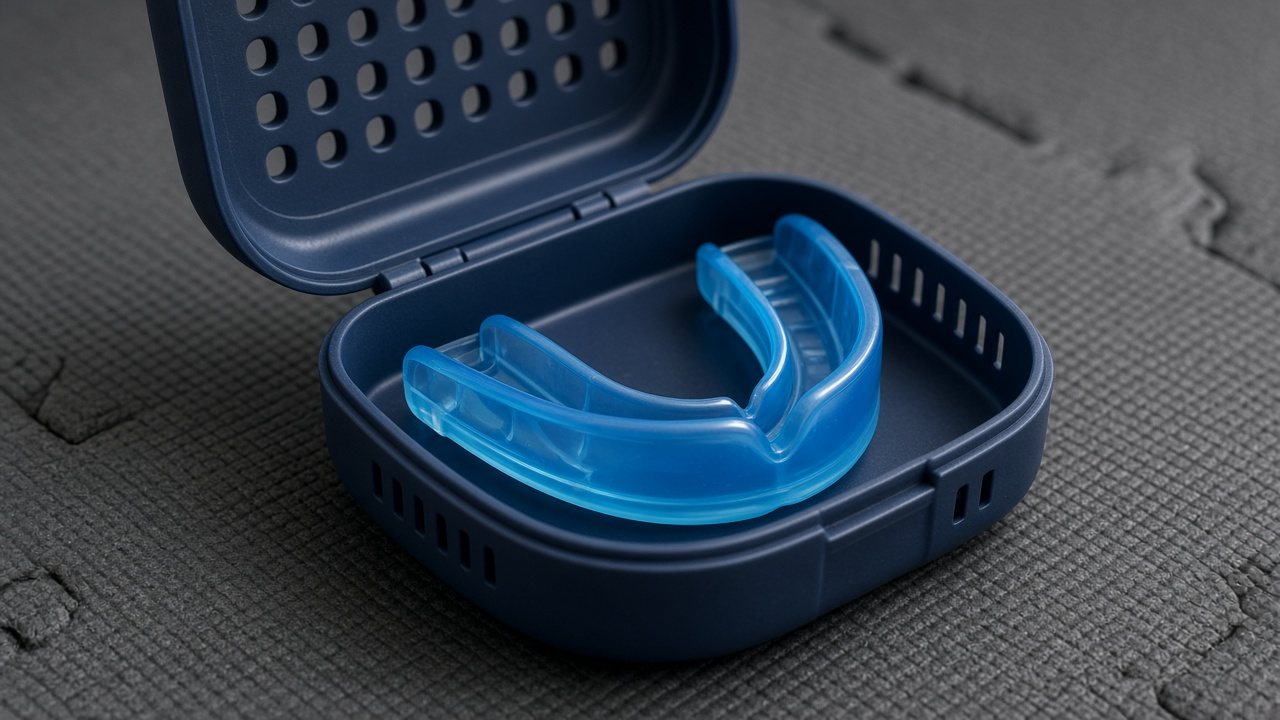
Image: generated for this site with AI; it does not show a real product, brand, or person.
Many jiu-jitsu injuries to the mouth happen by accident: a knee, an elbow, a head clash during a scramble. Schools differ on whether they require a mouthguard, and many beginners’ classes do not involve hard sparring, but plenty of people wear one anyway, especially once they start live rounds. The American Dental Association recommends a properly fitted mouthguard to reduce the incidence and severity of oral injury in sports.
This page summarizes American Dental Association guidance and lists example seller listings. It is not dental advice and not a review. Talk to your dentist, especially if you have braces, a retainer, or other dental work.
Some links on this page go to example products on Amazon. As an Amazon Associate I earn from qualifying purchases. These are examples drawn from seller listings, not reviews, and not a claim that any product is best. Check the seller’s current size, price, and return policy before you buy.
The three kinds of mouthguard
| Type | What it is (per the ADA) | Trade-offs |
|---|---|---|
| Stock | Preformed and ready to wear. | Least expensive. The ADA says they often do not fit well and can make breathing and talking harder. |
| Boil-and-bite | Softened in hot water, then shaped to your teeth by biting. The ADA says follow the manufacturer’s directions. | Usually a better fit than stock. JADA’s consumer guide says people with braces should not use boil-and-bite guards. |
| Custom-made | Made by a dentist from an impression of your mouth. | The ADA says the best mouthguard is one custom made by your dentist. It costs more and needs a visit. |
If custom is out of budget, the ADA still advises wearing a stock or boil-and-bite guard over none at all.
What to check before you buy
- Fit that stays put. The ADA says an ideal mouthguard stays in place comfortably and securely.
- Breathing and talking. You will need to talk to a partner and your coach. If you cannot, it is a poor choice.
- Shape after molding. JADA’s consumer guidance suggests checking a boil-and-bite guard after fitting so it hasn’t become too thin where your teeth meet.
- Easy to clean, and a case that lets it air. Rinse it after every class.
- Braces and retainers. The ADA advises not wearing removable retainers during contact sports and says to ask your dentist or orthodontist about guards for braces.
We have not checked whether any listing below holds an ADA Seal of Acceptance. The ADA page we read names only two boil-and-bite products with the Seal, neither of which is linked here.
Examples from current listings
Venum Challenger Mouthguard
The listing describes a boil-and-bite guard (softened in hot water and molded to your teeth), with vents for airflow. Sold in several colors; this link opens Ice/Blue.
View on AmazonSISU Aero Mouthguard
The listing describes a thin guard that starts flat and is custom-molded to your mouth and can be remolded. Sized; the linked listing is Medium, Charcoal Black.
View on AmazonBulletProof Sports Mouthguard
The seller describes a thin guard with airflow channels and 3D molding. The listing’s superlatives (such as “thinnest”) are marketing claims this site has not verified.
View on AmazonSources
- ADA MouthHealthy — Mouthguards. Types of mouthguards; custom-made is best; stock and boil-and-bite as alternatives; braces.
- American Dental Association — Athletic mouth protectors. Recommendation to wear a properly fitted mouthguard; the three types and what an ideal one is.
- JADA — Protect your smile with a mouthguard. Consumer guidance on types and what to look for; braces and boil-and-bite.