Gear
How to choose a BJJ gi
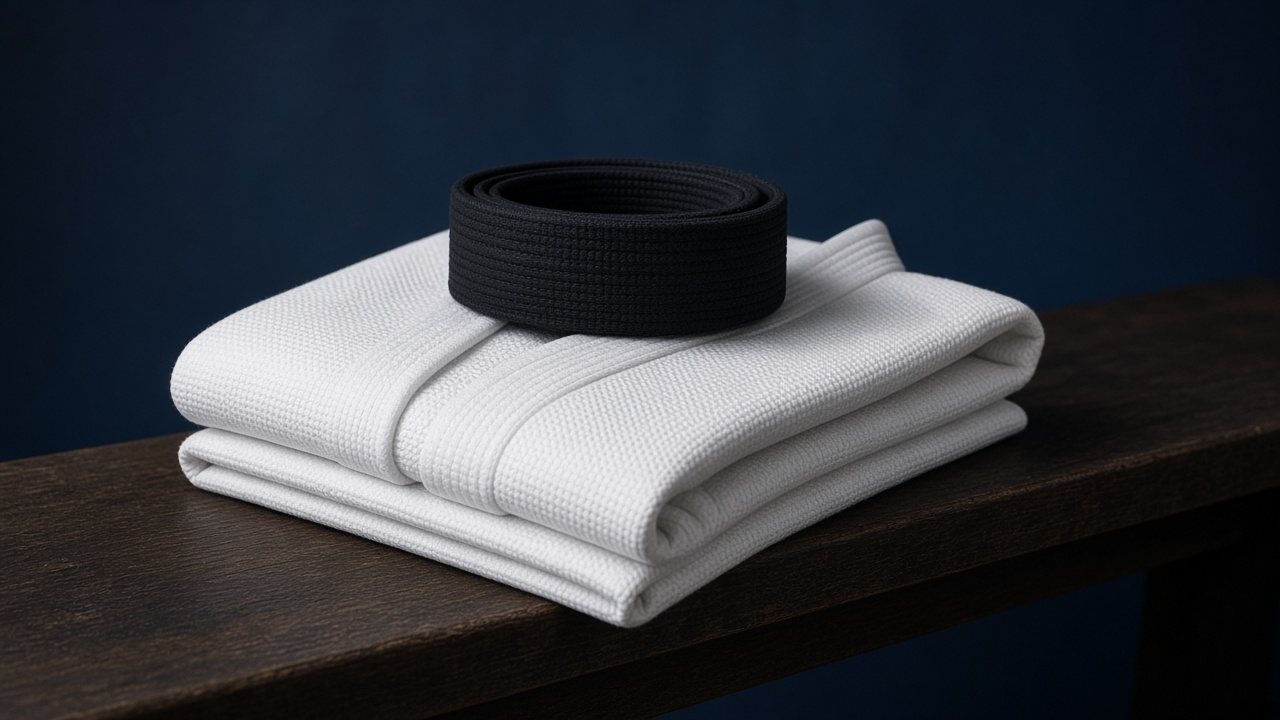
Image: generated for this site with AI; it does not show a real product, brand, or person.
A gi (also called a kimono) is the jacket, pants, and belt used in gi classes. Many schools will tell you what to wear to a trial class, and some will lend you a gi. So the first rule of buying one is the cheapest: ask your school before you spend anything. Some schools require a particular color or ask you to avoid patches. This page covers what to look at once you do need your own.
This is a buying guide built from published rules and seller listings. It is not a review: this site has not worn, washed, or tested any gi linked below, and nothing here ranks them.
Some links on this page go to example products on Amazon. As an Amazon Associate I earn from qualifying purchases. These are examples drawn from seller listings, not reviews, and not a claim that any product is best. Check the seller’s current size, price, and return policy before you buy.
Fit and sizing
BJJ gis are often sized differently from everyday clothes. The listings below use sizes such as “A1” instead of S/M/L, and one listing points buyers to a “special sizing guide.” Every brand has its own chart, usually based on height and weight, so use the chart on the seller’s page, not a size you wear in another brand. If you are between sizes, read the listing for notes about how that gi fits and whether it is sold preshrunk. Cotton can shrink, and one listing below specifically says its fabric is preshrunk; others do not say.
For competition, the IBJJF measures gis: the jacket should reach the thigh, sleeves should end no more than 2 cm from the wrist with the arm extended, and pants should end no more than 2 cm above the ankle bone. You do not need to match that to train at home or in a regular class, but it is a handy yardstick if you ever plan to enter an IBJJF event.
Color, fabric, and competition rules
IBJJF rules allow white, royal blue, or black gis. The whole gi has to be one color — a jacket, pants, and collar that don’t match are not allowed — and the fabric has to be woven cotton or cotton-like material. Your school and local tournaments can have their own rules, so check with them first. White is the common default for a first gi because it is accepted nearly everywhere, but that is a convenience, not a rule for training.
Gis come in different weaves and weights. Sellers describe lighter “competition” gis and heavier, more durable ones. Sellers usually describe lighter gis as cooler and heavier ones as more durable. Those are general seller claims; without lab or long-term wear data, this site is not going to say one is better. Read the listing’s description and decide what matters for how often you train.
Examples from current listings
These are examples of widely sold gis, pulled from Amazon listings that were in stock when this page was written. Each link opens one size and color; use the size selector on the seller page.
FUJI All-Around Brazilian Style Jiu Jitsu Uniform
The seller describes this as a mid-weight jacket with a stiff, thick collar and twill pants with a drawstring. Listed in A-sizes. One of the longer-running names in the category; no testing by this site.
View on AmazonElite Sports IBJJF kimono (men’s)
Listed as IBJJF kimono-style, with preshrunk fabric and a free belt included. The listing points to a “special sizing guide,” so check it before choosing a size.
View on AmazonElite Sports Ultra-Light women’s BJJ gi
The listing is for women’s and girls’ cuts, advertised as an ultra-light, IBJJF-style gi. Check the sizing guide on the page, since women’s cuts differ from men’s.
View on AmazonGold BJJ Comp380 Gi
The title calls this a lightweight, IBJJF-legal gi for men and women. “IBJJF legal” is the seller’s claim; compare it with the current IBJJF uniform page below if you compete.
View on AmazonKeeping it clean
A gi soaks up sweat and spends time pressed against other people’s skin and a shared mat. The CDC advises athletes to wash and completely dry uniforms after every use (a dryer, not hang drying, per its MRSA guidance) and to follow the label’s instructions. Gi labels often say to avoid hot water or the dryer because of shrinkage, so you may need to balance those two instructions. Do not share your gi, and do not put a sweaty gi back into a bag with clean clothes. The American Academy of Dermatology also says to wash sports bags.
When to see a doctor
If you notice sores, redness, swelling, warmth, or pus, or a ring-shaped rash, tell your coach and see a healthcare provider before you train again. Do not guess at skin problems.
Sources
- IBJJF — Uniform. Official gi and no-gi uniform requirements for IBJJF events (gi colors, fabric, belt, no-gi shirts and shorts).
- CDC — MRSA prevention and control for athletes. Hygiene, washing and drying uniforms, not sharing personal items, covering cuts.
- CDC — Ringworm prevention. Shower after practice, keep sports gear clean, do not share gear.
- American Academy of Dermatology — How to prevent skin conditions in athletes. Wash clothes and sports bags, disinfect equipment, check skin regularly.